
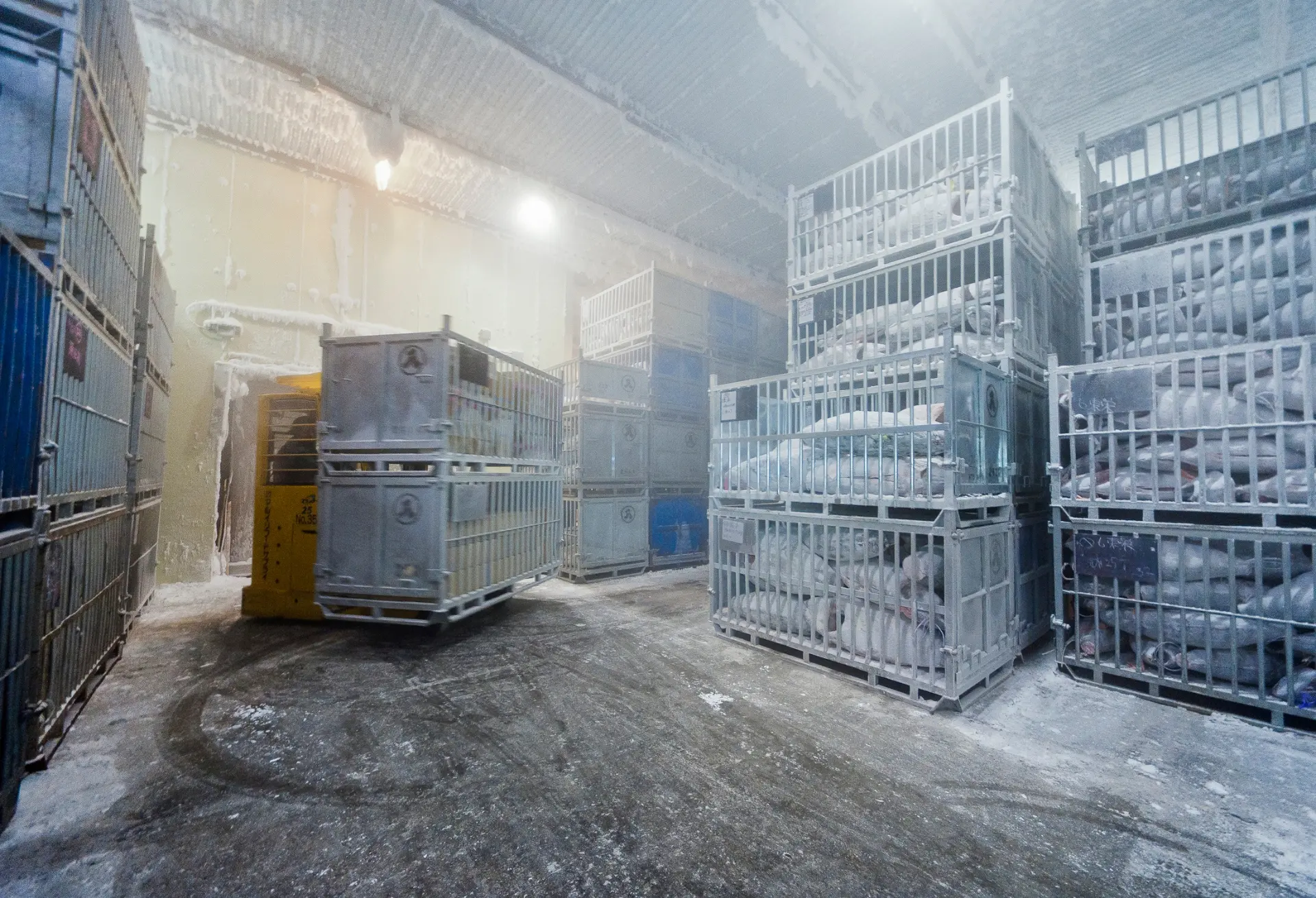
There is a persistent myth in the food business: that fresh is always better than frozen. For home cooks making a single meal, there may be some truth to the preference. But for restaurant owners, supermarket managers, school canteen operators, and retailers supplying Libreville and the wider Gabonese market, that assumption is costing real money.
The science, the economics, and the operational reality all point in the same direction: for food businesses in Gabon, frozen food is not a compromise. It is a strategic advantage.
This guide explains why — covering nutrition, cost control, food waste reduction, supply chain reliability, and what the growing African frozen food market means for your business in 2026 and beyond.
| The African Frozen Food Market Is Growing FastThe Middle East and Africa frozen food market is projected to grow at a CAGR of 6.2% through 2030, driven by urbanisation, improving cold-chain infrastructure, and rising demand for convenient, safe food options. Sub-Saharan Africa is specifically identified as an emerging high-growth region. Business owners who build reliable frozen food supply chains now are positioning themselves ahead of this shift. |
1. The Nutrition Argument: Frozen Food Is as Good as Fresh — and Sometimes Better
The most common objection to frozen food is nutritional quality. The assumption is that freezing destroys vitamins, minerals, and the nutritional integrity of food. Current food science tells a different story.
The key is understanding what happens at the moment of freezing. Frozen vegetables, for example, are typically processed and frozen within hours of harvest — at peak nutritional content. Fresh produce, by contrast, spends days or even weeks in transit and on shelves, during which nutrient content steadily degrades due to exposure to heat, light, and oxygen.
Research consistently finds that frozen produce retains comparable — and in some cases higher — levels of vitamins and minerals than fresh produce that has spent several days in the supply chain. For protein-based products like chicken, beef, and fish, the nutritional profile is essentially identical to fresh, because freezing simply halts biological processes without destroying protein structure, amino acids, or mineral content.
What this means for your business:
- You can offer nutritionally equivalent products to fresh alternatives, at lower cost and with longer shelf life
- You can market frozen products honestly as high-quality and nutritious — because they are
- Your customers and diners receive the same nutritional value regardless of when you received the stock
For school canteens in particular — where nutritional standards are regulated and audited — this matters enormously. Reliable, nutritionally consistent frozen products are far easier to plan menus around than fresh produce with unpredictable quality and availability.
2. Cost Control: Frozen Food Delivers Measurable Savings for Food Businesses
For any food business operating on tight margins — which is most of them — frozen food offers several concrete cost advantages over fresh supply.
Predictable pricing
Fresh food prices fluctuate with season, weather, import delays, and market conditions. A restaurant building menus around fresh ingredients faces pricing uncertainty that makes it difficult to maintain consistent food costs. Frozen food pricing, by contrast, is significantly more stable. You can negotiate supply agreements, lock in pricing for defined periods, and build menus with accurate cost predictions.
Reduced preparation labour
Frozen products arrive pre-portioned, pre-cleaned, and ready to cook. Frozen chicken cuts, fish fillets, and pre-cut vegetables eliminate the labour hours your kitchen team would otherwise spend on preparation. In a Libreville food business where labour costs are a significant operational expense, this translates directly into savings.
Bulk purchasing efficiency
Frozen food allows you to buy in volume when pricing is favourable and store stock without spoilage risk. Fresh supply forces you to buy in smaller, more frequent quantities to avoid waste. The ability to buy and hold frozen stock means better purchasing leverage with your distributor and fewer urgent last-minute orders that typically come at premium cost.
| Real Numbers on Cost SavingsAccording to research by the American Frozen Food Institute, 64% of shoppers report that frozen foods help them manage rising food costs — and this dynamic applies equally in the B2B context. For food service businesses, frozen procurement consistently delivers lower total food costs than comparable fresh supply when waste, preparation labour, and price volatility are factored in. |
3. Food Waste Reduction: A Critical Issue for Gabon’s Food Businesses
Food waste is one of the most significant — and most underestimated — cost drivers in the food service industry. Fresh ingredients that arrive in bulk have a narrow window of use. Anything not consumed within that window is a total financial loss.
In Gabon’s climate, where ambient temperatures accelerate deterioration of unrefrigerated products, the problem is particularly acute. A delivery of fresh chicken or vegetables that sits even a few hours outside refrigeration can be compromised before it reaches your kitchen.
Frozen food eliminates this exposure entirely. Products stored at -18°C maintain quality and safety for months, not days. You draw down stock as needed, and nothing is wasted because a delivery arrived on a slow business day.
The financial impact of waste reduction:
- Zero spoilage loss on frozen stock stored correctly at -18°C
- Ability to use partial quantities and return the rest to the freezer without quality loss
- Menu flexibility — you can hold frozen stock against seasonal demand spikes without risk
- Reduced ordering frequency, lowering transaction and delivery administration costs
Studies from Cornell University have found that frozen foods are consistently wasted less frequently than fresh counterparts at both the retail and food service level. For a restaurant owner in Libreville running tight daily margins, even a 10–15% reduction in food waste translates into meaningful profit improvement.
4. Supply Chain Reliability: Why Frozen Supply Is the Stronger Choice in Gabon
Gabon’s food supply chain faces genuine challenges. Import logistics, port processing times, road infrastructure outside Libreville, and the tropical climate all create points of vulnerability for fresh product supply. A fresh food delivery that arrives a day late is often unsellable. A frozen food delivery that arrives a day late is still perfectly safe and usable.
This resilience makes frozen food the more reliable choice for food businesses that cannot afford supply disruptions. Consider the operational reality:
- A frozen food distributor with proper cold storage can hold your regular order for an additional day or two without product quality impact if scheduling changes are needed
- Frozen products survive power outages and temperature fluctuations far better than refrigerated fresh produce
- In the event of an unexpected demand spike — a large catering order, a school event, a weekend rush — you can draw on frozen stock held in advance
- Seasonal fresh produce unavailability does not affect frozen supply — key vegetables, proteins, and other ingredients are available year-round
For businesses outside central Libreville — in areas where delivery frequency may be lower — frozen supply is even more clearly the practical choice. One well-planned delivery of frozen stock can support a week or more of uninterrupted operations.
5. Gabon-Specific Advantages: Why the Local Context Favours Frozen
Everything discussed above applies globally — but several factors make the case for frozen food particularly strong in the Gabonese context.
The climate
With average temperatures above 25–30°C year-round in Libreville, the ambient environment accelerates the deterioration of any food product not kept at appropriate temperatures. Fresh food has almost no tolerance for temperature excursions. Frozen food, properly stored and transported, is far more forgiving.
Import dependency
Gabon imports a significant proportion of its protein supply — beef, chicken, and fish in particular. Fresh imported proteins face long transit times that inevitably compromise quality. Frozen imported proteins arrive in exactly the condition they were packaged, regardless of how long the journey took.
Urban growth in Libreville
Libreville is a growing urban centre with a rapidly expanding food service sector. As more restaurants, supermarkets, and food service businesses open and scale, the demand for reliable, high-quality frozen supply is increasing. Businesses that establish strong frozen supply chains now will be better positioned to scale efficiently.
Cold-chain development
Investment in cold-chain infrastructure in Central Africa is accelerating. Distribution networks, warehouse capacity, and refrigerated logistics are all improving, making frozen food increasingly accessible across Gabon — not just in central Libreville.
6. Frozen vs. Fresh: A Practical Comparison for Gabon Food Businesses
| Factor | Fresh Supply | Frozen Supply | Advantage |
| Shelf life | 2–7 days | 3–18 months | Frozen ✓ |
| Price stability | High volatility | Stable & predictable | Frozen ✓ |
| Waste risk | High in tropical climate | Near-zero with proper storage | Frozen ✓ |
| Nutritional value | Degrades during transit | Locked in at processing | Equal or Frozen ✓ |
| Supply resilience | Vulnerable to delays | Resilient to schedule changes | Frozen ✓ |
| Import quality | Compromised by transit time | Preserved regardless of transit | Frozen ✓ |
| Prep labour | Extensive cleaning/cutting | Pre-portioned and ready | Frozen ✓ |
What to Look for in a Frozen Food Supplier for Your Gabon Business
Understanding the advantages of frozen food is one part of the equation. The other is ensuring your distributor can actually deliver on the cold-chain commitments that make those advantages real.
The best frozen food distributors in Gabon offer:
- AGASA-certified operations with documented food safety protocols
- Fully refrigerated warehouse and delivery infrastructure maintaining -18°C throughout
- International sourcing from verified producers in the USA, Brazil, Europe, and Asia
- A broad product range covering poultry, beef, fish, vegetables, fries, and dairy
- Same-day or next-day delivery in Libreville, with free delivery options
- Flexible order sizes to serve businesses of all scales
How SuperGel S.A. Supports Food Businesses Across Gabon
SuperGel S.A. is a dedicated B2B frozen food distributor serving supermarkets, restaurants, school canteens, retailers, and food service businesses across Libreville and Gabon. As an AGASA-certified distributor with full cold-chain infrastructure, we supply premium frozen poultry, beef, fish, vegetables, fries, and dairy products sourced from trusted international producers.
Our commitment: premium quality, on-budget pricing, and on-time delivery — so you can focus on running your business rather than managing supply chain problems.
We offer free delivery within Libreville and same-day delivery on confirmed orders. Contact us via phone, WhatsApp, or email to discuss your supply needs and receive a personalised quote.
| Contact SuperGel S.A. TodayStop worrying about stock shortages and inconsistent supply. Let SuperGel S.A. handle your frozen food supply chain. Call or WhatsApp: 0241 01740038 | Email: info@sgl-ga.com | Address: ZI Oloumi, Libreville, Gabon |
Frequently Asked Questions
Is frozen chicken as nutritious as fresh chicken?
Yes. Properly frozen chicken retains the same protein content, amino acid profile, and mineral composition as fresh chicken. The freezing process halts biological activity without degrading nutritional value. In some cases, frozen chicken that has been rapidly processed post-harvest may be more nutritious than fresh chicken that has been stored for several days.
How long can frozen food be stored safely at -18°C?
Most frozen food categories can be safely stored for 3 to 18 months at -18°C. Specific guidelines: frozen beef and poultry — up to 12 months; frozen fish (lean varieties) — up to 12 months, oily fish up to 6 months; frozen vegetables — 12 to 18 months; frozen fries — up to 12 months.
Can frozen food help my restaurant reduce food costs?
Significantly, yes. Frozen food eliminates spoilage waste, reduces preparation labour, allows bulk purchasing when pricing is favourable, and provides price stability that makes food cost budgeting more accurate. Most food businesses that shift from predominantly fresh to frozen supply report meaningful reductions in total food costs.
What temperature should frozen food be stored at?
Frozen food must be maintained at or below -18°C (0°F) throughout storage and transport. This temperature halts microbial growth and enzymatic activity that would otherwise cause spoilage and safety risks.